Maritime Talks About Retention. There’s an Opportunity to Go Further.
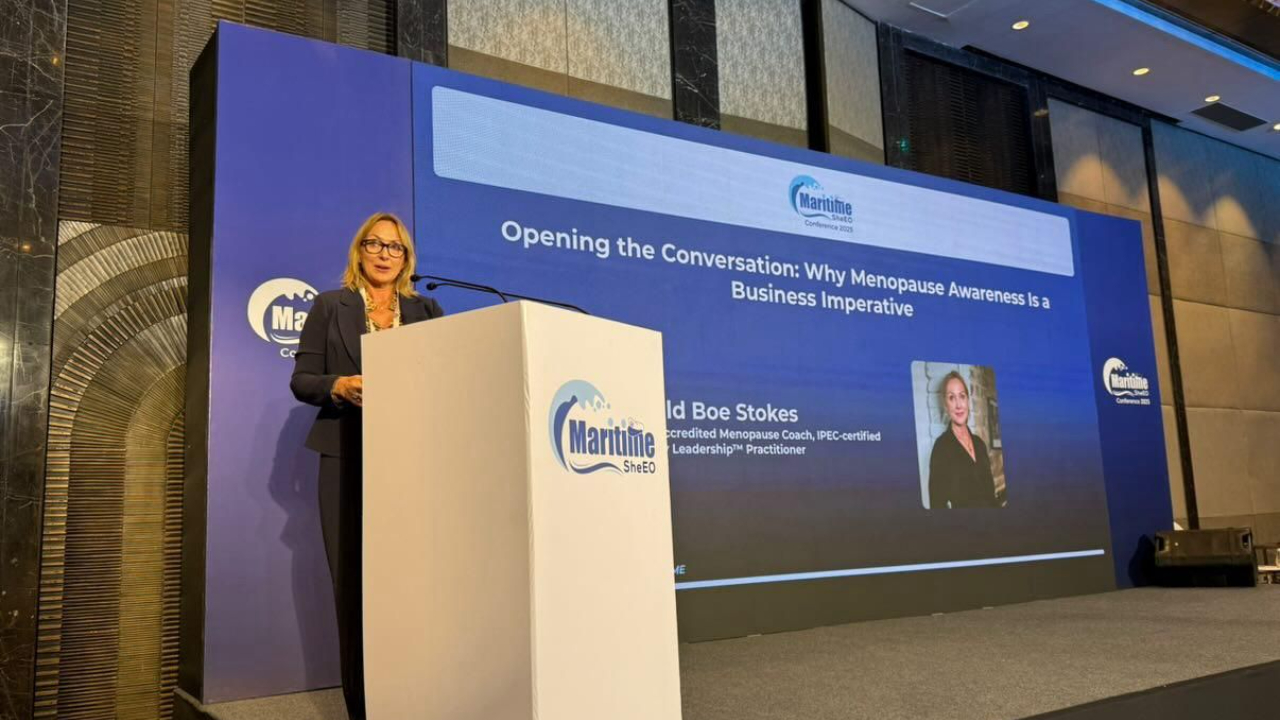
Maritime gave me some of the best years of my career. The global reach, the sense of belonging to an industry that moves the world, literally. The travel, the relationships across continents, the privilege of working with people from all around the world.
The retention conversation in maritime has been going on for years. Attract more women. Keep women. Build the pipeline. Create visible female role models. The intent is real. The progress has been real.
And yet there is a gap that almost nobody has named, a gap sitting right in the years when the women maritime has invested in are at the height of their careers.
That gap is female health - the full arc of it. Endometriosis. PMDD. Perimenopause. Menopause. The conditions and transitions that affect women across their working lives, and that most workplaces have never fully built a framework to support.
In this newsletter, I focus on perimenopause and menopause, but they do not exist in isolation. They are part of a wider conversation this industry has only just begun to explore.
Who she is, across every part of the industry
She is the shipbroker who has built her book over twenty years. The maritime lawyer who knows her jurisdiction inside out. The P&I correspondent who manages complex claims across time zones. The head of crewing at a major ship management company. The classification surveyor. The port director. The marine finance lead at a major bank. The operations manager who has been the backbone of a fleet for a decade.
She is also the woman at sea, and for those women, the challenge carries an additional layer.
The basics still matter: feminine hygiene products readily available on board, adequate private facilities, healthcare that doesn’t treat female physiology as an afterthought. These are solvable. They are also a signal of whether an industry has truly thought about the women within it.
The retention dynamic runs through every shore-based role, every leadership position, every professional function in the maritime value chain.
What is actually happening
She proved herself in a sector that still sometimes looked surprised to see her. She earned credibility through expertise, precision and resilience.
She is trusted, experienced and at peak professional value, and she may currently be navigating something that nobody in her working world has given her the language for.
Waking at 3am, heart racing. Managing cognitive load that feels heavier than it used to, in environments where cognitive precision matters. Confidence that wavers slightly, in ways she cannot fully explain and would rarely say out loud.
Because this is maritime, she has worked too hard to be seen as anything other than fully capable, so she manages it quietly, and the industry watches some of its experienced women gradually take up less space, without ever quite understanding why.
The legal landscape has shifted and the timing matters
In December 2025, the Employment Rights Act passed into UK law. For employers with 250 or more employees, menopause action plans become voluntary from April 2026 and mandatory in 2027.
More broadly, organisations are increasingly being asked to demonstrate how they are supporting employees through this stage of life - not just in policy, but in practice.
From January 2027, changes to unfair dismissal protection will also come into effect, shifting how organisations think about consistency, leadership capability and employee experience across the board.
Menopause-related employment tribunal cases have already increased significantly in recent years. This isn’t just a legal or compliance conversation, it is becoming part of a wider reflection on workplace culture, leadership awareness and organisational responsibility.
Sealing the gap in retention
A phrase from a recent roundtable stayed with me: seal the bucket.
Because in maritime, an industry already navigating significant skill shortages, retaining experienced women is a business continuity issue.
Often, the reasons women leave are not fully visible in exit data. Career change. Personal reasons. Ready for something new.
What the organisations that move now will gain
Women are making decisions about where to take their talent based on how they will be supported, across the span of their careers.
The organisations that start now will not only retain the women they have. They will shape the kind of workplace that experienced professionals choose to stay in, and that future leaders actively seek out.
In an industry working hard to attract female talent, that becomes a genuine and lasting competitive advantage.
Maritime shaped something important in me. I would like to see it lead here too.
The capability is there. The intent is there, what’s needed now is a clear, confident starting point.
If this is a conversation your organisation is beginning to explore, let’s continue the conversation.
Is your organisation ready?
From April 2026, menopause action plans become voluntary for larger employers - mandatory in 2027. The organisations that move now will be ahead of compliance and ahead of the market.
Send a dm to book a 30-minute Executive Preview Call and let's look at where you stand and what the right first step looks like for your organisation.